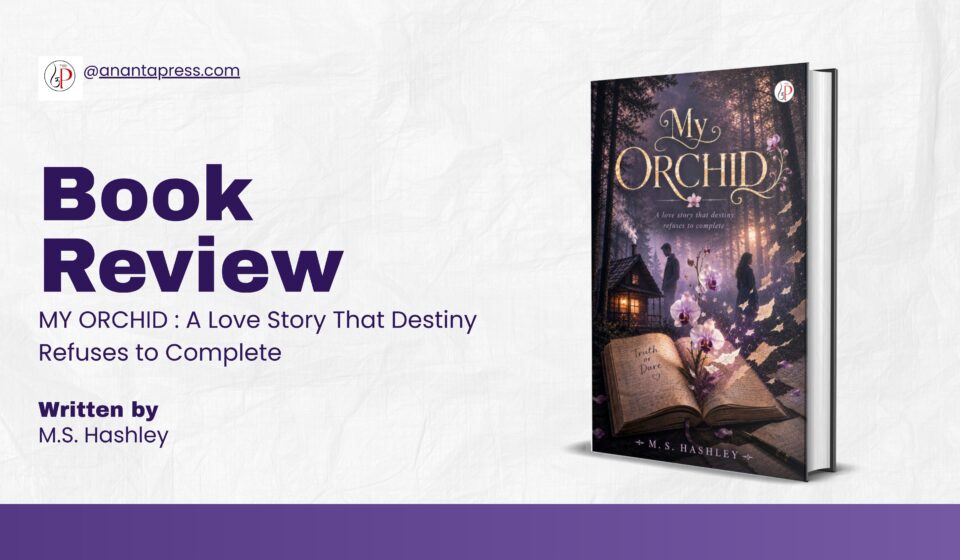
My Orchid by M.S. Hashley: A Heartfelt Story of Love, Sacrifice and the Memories We Cannot Leave Behind

Some love stories are written around the promise of forever. Others are built upon the painful understanding that even the strongest promises can be broken by circumstances beyond our control. M.S. Hashley’s My Orchid: A Love Story That Destiny Refuses to Complete belongs to the second category. It is an emotional contemporary romance that explores not only the beginning of love, but also its ability to heal old wounds, reshape relationships and continue living through memories after two people are separated.
At its centre is Hardhik, a young man who is still trying to understand the difference between attachment and genuine love. He lives with his maternal uncle, Rohan, whom he affectionately calls Ro. Their relationship is one of the strongest elements of the novel. Ro is not simply a guardian or father figure; he is Hardhik’s closest friend, confidant and emotional home. From late-night conversations and video-game sessions to discussions about heartbreak, ambition and family, their bond gives the story warmth and stability.
When Hardhik goes through a difficult breakup with his girlfriend Sana, he initially responds with anger, ego and self-destructive behaviour. He feels that Sana never respected his ambition to become an author and expected him to change his future according to her plans. Instead of confronting his emotions maturely, he turns towards drinking and blames everyone except himself.
Ro challenges Hardhik’s understanding of love. Through Ro’s words, the novel asks an important question: do we truly love a person, or do we sometimes only love the comfort and attention they bring into our lives?
This question becomes the emotional foundation of the book.
Ro knows more about love than Hardhik initially assumes. Years ago, he fell deeply in love with Lavanya, an intelligent and determined visually impaired woman. Their connection began through a competition in which they worked together to create an affordable water-purification solution. What started as reluctant collaboration gradually developed into respect, friendship, business partnership and unspoken love.
Lavanya dreams of establishing a mobile library and organic café. Ro believes in her vision when banks and investors reject it. Together, they create LaRoh Threads and build a meaningful professional relationship. Ro changes several parts of his lifestyle for Lavanya, not because she demands it, but because loving her makes him want to become a better person.
However, their love remains incomplete. Ro walks away after convincing himself that Lavanya would be happier with another man. He allows the world to believe damaging rumours about him rather than reveal the truth and risk harming Lavanya’s reputation. His sacrifice becomes both beautiful and tragic. It protects the woman he loves, but it also deprives both of them of the life they might have shared.
Hardhik begins to reconsider his own ideas about relationships after hearing Ro’s story. He realizes that love is not merely about attraction, possession or winning an argument. It can also be expressed through patience, transformation, responsibility and the willingness to protect another person’s happiness.
Seeking isolation and inspiration for his writing, Hardhik rents a cabin in the woods. This is where the novel changes from a family drama into an unusual and charming romance. Inside the cabin, he discovers a mysterious diary containing puzzles, clues and personal questions. The anonymous woman behind the diary knows that he has secretly published a book under a pen name. She challenges him to solve riddles and answer difficult questions about his life.
Hardhik calls her Orchid.
Their diary conversations become the most distinctive part of the novel. Instead of beginning with physical attraction, social media messages or conventional dates, their relationship grows through handwritten truths. They discuss betrayal, friendship breakups, loneliness, ambition, family expectations and the pain hidden inside their writing.
The diary allows them to communicate without filters. There is no instant deletion, no carefully edited message and no online performance. Their words remain on the page exactly as they were first written. Through this device, M.S. Hashley presents writing as more than a profession. Writing becomes confession, companionship and emotional survival.
Orchid understands the pain behind Hardhik’s stories because she is also a writer. Her unpublished novel, Drifting Away, reveals her sensitivity, intelligence and suppressed loneliness. Although her parents have provided her with material comfort, she feels emotionally neglected. She describes the difference between having a father and mother and having a dad and mom—a distinction that captures her longing to be noticed, understood and prioritised.
As Hardhik and Orchid continue exchanging questions, books, gifts and challenges, they fall in love before they properly meet. Hardhik does not know her real name, yet he feels that he knows her inner world. Orchid is afraid of entering a relationship because a painful friendship breakup has damaged her ability to trust permanence. She fears that losing a lover would destroy her more completely than losing a friend.
Their first meeting at Roamies café is filled with hesitation and vulnerability. Orchid initially refuses a relationship, but Hardhik asks her not to allow the graves of yesterday to control the possibilities of tomorrow. Their conversation leads to an impulsive yet sincere marriage proposal, beginning a new chapter in their story.
The novel then introduces a major connection between its two love stories: Orchid is Lavanya’s daughter.
This revelation places Hardhik in an impossible emotional situation. The woman he loves is the daughter of the woman Ro loved and left behind. Hardhik feels forced to choose between Orchid and the man who has raised him for twenty-two years. Unable to imagine abandoning Ro, he prepares to sacrifice his relationship. Ro, however, leaves voluntarily because he refuses to become the reason Orchid loses her faith in love.
Through this conflict, the book shows that love does not exist in isolation. Every relationship carries the weight of earlier choices, family histories and unresolved wounds. Hardhik and Orchid’s future cannot be separated from Ro and Lavanya’s past.
One of the most admirable qualities of Orchid is her emotional generosity. She does not become jealous of Hardhik’s bond with Ro. Instead, she understands that Ro occupies a place in Hardhik’s life that romantic love should not try to replace. She encourages Hardhik to bring him home and makes a sincere effort to understand the older man’s pain.
The scenes in which Orchid, Hardhik and Ro spend time together are among the happiest passages in the novel. They read Hardhik’s manuscript, play games, share meals and speak honestly about their losses. Orchid creates handmade quilts embroidered with the memories of both love stories. These moments make the eventual tragedy especially painful because the reader has been shown the family they might have become.
The title My Orchid carries symbolic importance. An orchid is beautiful, distinctive and more unusual than the traditional rose commonly associated with romance. Hardhik sees Orchid as someone rare in a world filled with predictable connections. Her anonymity also makes the name feel intimate. Everyone else may know her legal identity, but “Orchid” belongs exclusively to their shared story.
M.S. Hashley writes in an accessible, conversational style. The dialogue-driven narration makes the characters feel young, immediate and emotionally open. Hardhik’s humour balances some of the heavier subjects, while Ro’s experiences give the story maturity. The book discusses friendship trauma, emotional neglect, disability, sacrifice, addiction, family loyalty and the healing power of creative expression.
The plot relies on dramatic coincidences, and certain emotional developments happen very quickly. Some readers may also find Hardhik’s sudden marriage proposal impulsive or the final tragedy intensely melodramatic. The prose could benefit from tighter editing in places, particularly where similar feelings are repeated across several conversations. Nevertheless, the emotional sincerity of the story remains its greatest strength.
The ending is devastating, but it is not presented merely for shock. Orchid’s final decision completes the novel’s larger exploration of selfless love. Her sacrifice changes Hardhik and Ro permanently. Hardhik honours her by becoming the author she believed he could be, while Ro begins to understand that memories should be treasured rather than transformed into lifelong punishment.
The novel also offers a thoughtful reflection on the idea of parallel universes. People often comfort themselves by imagining another universe in which they never lost the person they loved. Hardhik eventually realizes that such thinking can make us overlook what we were fortunate enough to experience in this life. Perhaps another version of him still waits to meet Orchid, while he already possesses memories that no alternative life can take away.
My Orchid is ultimately a novel about incomplete relationships that still leave complete emotional legacies. Ro and Lavanya do not receive the future they once imagined. Hardhik and Orchid are denied the forever they promise each other. Yet their love is not treated as meaningless simply because it does not last in the conventional sense.
The book suggests that some people enter our lives not to remain physically beside us forever, but to change the direction of our journey. Orchid gives Hardhik the confidence to love honestly, write under his own name and value the people who make his life whole. Ro teaches him that love is demonstrated through actions rather than possession. Lavanya proves that strength and independence can exist alongside vulnerability.
For readers who enjoy emotional romances, diary-based storytelling, intergenerational love stories and narratives about sacrifice, My Orchid offers a moving experience. It may break the reader’s heart, but it also leaves behind a message of gratitude: instead of only mourning the future we were denied, we should honour the memories we were fortunate enough to receive.
Some love stories reach marriage, old age and a peaceful conclusion. Others remain unfinished on the page but continue inside the people who survived them. My Orchid is one such story—a tale of two generations, two incomplete romances and one enduring belief that love can remain meaningful even when destiny refuses to let it continue.
Buy From Online Channels:
Amazon – https://www.amazon.in/s?k=9789378210242
Flipkart – https://www.flipkart.com/my-orchid-love-story-destiny-refuses-complete/p/itma4a0573092811?pid=9789378210242
Anant Store – https://anantapress.com/product/my-orchid/