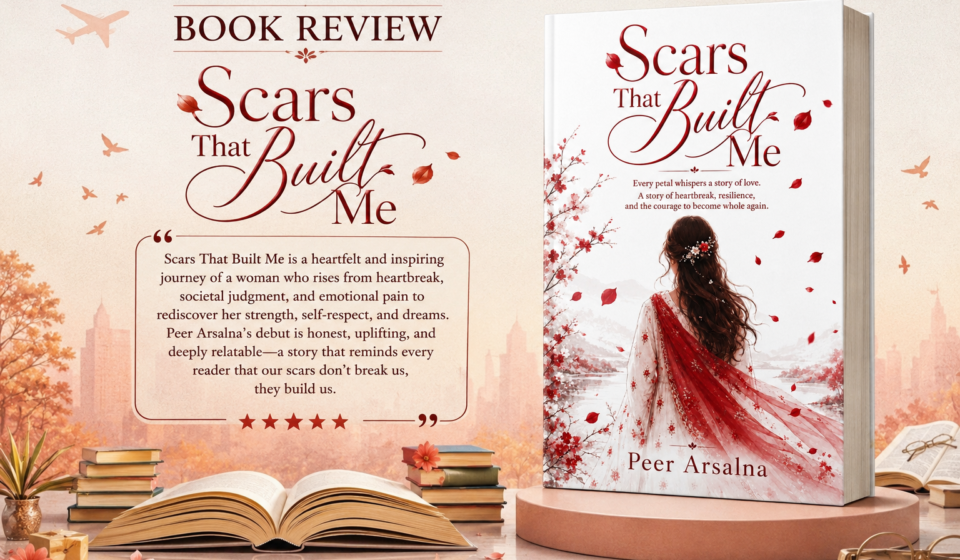

A Heartfelt Journey from Heartbreak to Healing, Self-Respect, and Inner Strength
Some books entertain. Some books inspire. And then there are books like Scars That Built Me, which quietly reach into the deepest corners of the human heart and remind readers that pain does not have to be the end of the story. In her debut work, Peer Arsalna delivers an emotionally charged and deeply personal narrative about heartbreak, healing, self-worth, and the courage to rebuild oneself after life’s most painful experiences.
This is not merely a novel about romantic loss. It is a reflection on emotional resilience, the societal pressures placed upon women, the importance of self-respect, and the transformative power of faith and forgiveness. Written in clear, accessible language, the book speaks directly to readers who have experienced rejection, betrayal, or self-doubt, encouraging them to believe that every scar carries the possibility of becoming a source of strength.
A Story That Feels Personal
At the heart of Scars That Built Me is a young woman who enters love with hope, trust, and dreams of forever. She believes she has found someone who values her, respects her ambitions, and will stand beside her through life’s challenges. Instead, she experiences one of the most devastating forms of heartbreak—not because love simply fades, but because the person she trusted lacks the courage to stand by her when it matters most.
What makes the story compelling is that the emotional conflict is realistic. The heartbreak isn’t driven by dramatic twists or sensational events; rather, it unfolds through broken promises, fear, societal pressure, and emotional abandonment. Many readers will recognize these quiet forms of pain because they mirror situations that occur in real life far more often than dramatic betrayals.
The protagonist’s journey is one of rediscovering herself after losing not only someone she loved but also the confidence, identity, and dreams she unknowingly sacrificed for that relationship. Rather than remaining trapped in grief, she slowly begins rebuilding her life, learning that true healing starts the moment we choose ourselves.
This transformation forms the emotional backbone of the novel and gives the story its greatest strength.
More Than a Love Story
Readers expecting a conventional romance may be surprised. While love and heartbreak provide the foundation, the book quickly expands into much larger themes.
Each chapter focuses on an important aspect of emotional growth:
- The illusion of perfect love
- Healing after emotional loss
- Society’s double standards toward women
- Self-respect and self-love
- The battle between heart and mind
- Choosing oneself without guilt
- Forgiveness and spiritual healing
Instead of following a traditional plot-driven structure, the book reads almost like an emotional journey or personal guide woven into storytelling. Each chapter introduces life lessons through the protagonist’s experiences, allowing readers to reflect on their own emotions as they move through the pages.
This structure makes the book particularly suitable for readers who enjoy inspirational literature alongside fiction.
Emotional Honesty That Connects
One of the book’s greatest strengths is its sincerity.
Peer Arsalna writes without trying to impress readers through overly complicated language or literary experimentation. Instead, she focuses on emotional truth. The feelings expressed throughout the book feel genuine because they come across as lived experiences rather than imagined drama.
The author captures familiar emotions with remarkable clarity:
- questioning one’s worth after rejection,
- replaying conversations endlessly,
- blaming oneself for another person’s failures,
- learning to forgive without forgetting,
- rebuilding confidence one small step at a time.
Readers who have experienced heartbreak will likely see parts of themselves reflected in these pages.
Rather than presenting healing as something quick or magical, the book acknowledges that recovery happens slowly—in moments of self-reflection, quiet courage, and everyday choices.
That realism gives the story emotional credibility.
A Strong Voice for Women’s Self-Worth
Perhaps the most powerful chapter discusses society’s double standards toward women.
Here, the author broadens the story beyond one relationship and addresses expectations that many women face throughout their lives. The protagonist reflects on how women are often expected to sacrifice their dreams, remain silent, accept judgment gracefully, and place everyone else’s happiness before their own.
Instead of presenting these ideas with anger, the author writes with conviction and compassion. Her message is clear:
A woman’s worth should never be measured by how much she sacrifices for others.
She encourages readers to pursue education, careers, ambitions, and independence without guilt.
These chapters elevate the book beyond a personal story, transforming it into an empowering message for women navigating societal expectations while trying to remain true to themselves.
The Role of Faith
Another distinguishing feature of Scars That Built Me is the way faith is integrated into the healing journey.
The final chapters place significant emphasis on trusting Allah, embracing patience (sabr), making dua, and understanding that not every closed door is a punishment. Instead, some endings are portrayed as acts of divine protection.
These reflections never feel forced within the context of the protagonist’s journey. Instead, they naturally become part of her emotional recovery.
Readers who appreciate spiritually inspired self-growth literature will likely find these sections meaningful and comforting.
At the same time, the central messages—hope, forgiveness, resilience, and self-worth—remain universal enough to resonate with a broad audience.
Forgiveness Without Forgetting
The chapter on forgiveness stands out as one of the book’s most mature discussions.
Rather than encouraging readers to excuse harmful behaviour, the author explains forgiveness as an act of personal freedom.
Forgiveness is shown not as forgetting betrayal or reopening painful chapters, but as refusing to allow bitterness to control one’s future.
This distinction is thoughtful and emotionally balanced.
It reminds readers that healing does not require pretending nothing happened. Instead, it requires choosing peace over resentment.
That message is likely to stay with readers long after they finish the book.
Writing Style
Peer Arsalna’s writing is simple, conversational, and heartfelt.
The language avoids unnecessary complexity, making the book accessible to readers from various backgrounds. The conversational tone often feels as though the author is speaking directly to the reader, offering reassurance during difficult moments.
Throughout the book, poetic verses appear at the beginning and end of chapters, adding emotional depth and giving the narrative a reflective quality.
There are also internal conversations between the protagonist’s heart and mind that effectively illustrate the emotional conflict between love and self-respect.
While the writing succeeds emotionally, the manuscript would benefit from additional professional editing. Readers may notice occasional grammatical inconsistencies, repetition of ideas, punctuation issues, and awkward phrasing.
Fortunately, these technical imperfections rarely diminish the sincerity of the story.
The emotional authenticity consistently remains stronger than the stylistic flaws.
What Makes This Book Special
Many books discuss heartbreak.
Many books discuss self-love.
But Scars That Built Me connects these themes through a deeply personal voice that never loses sight of hope.
Instead of encouraging revenge or resentment after betrayal, the author encourages readers to:
- rebuild confidence,
- protect their dignity,
- forgive wisely,
- trust God’s timing,
- and continue pursuing their dreams.
This optimistic perspective gives the book warmth and emotional depth.
Readers finish the story feeling encouraged rather than devastated.
Who Should Read This Book?
This book will especially resonate with:
- Readers recovering from heartbreak or emotional betrayal.
- Women seeking empowering stories about self-worth and independence.
- Fans of inspirational and motivational literature.
- Readers who appreciate emotionally reflective storytelling.
- Those interested in faith-based personal growth.
- Young adults navigating relationships and identity.
It may also serve as a comforting companion for anyone questioning their own value after rejection.
Final Verdict
Scars That Built Me is a sincere, emotionally rich debut that prioritizes healing over bitterness and growth over despair. Peer Arsalna transforms personal pain into a message of resilience, reminding readers that the deepest wounds often become the foundation of our greatest strength.
Although the book could benefit from tighter editing and more polished prose, its emotional honesty, uplifting message, and empowering themes more than compensate for its technical imperfections.
By the final page, readers are left with a simple but powerful realization: heartbreak may leave scars, but those scars do not define us—they build us.
For anyone searching for hope after disappointment or strength after loss, Scars That Built Me offers reassurance that healing is possible, self-respect is essential, and choosing yourself is never something to feel guilty about.
Rating: ★★★★☆ (4.5/5)
A compassionate and inspiring debut that reminds readers that life’s deepest scars often become the strongest foundations for personal growth.