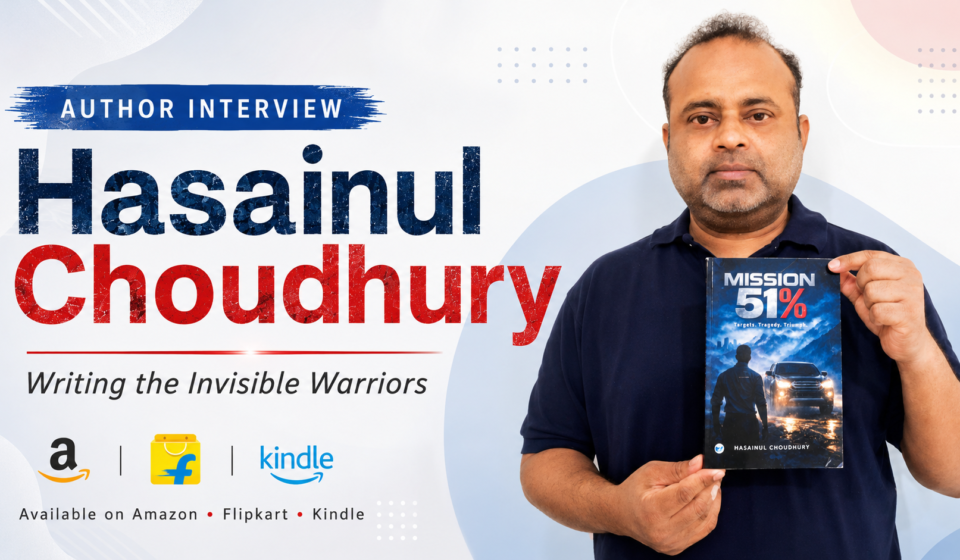

Q1. Mission 51% centres on the idea that behind every corporate success story is an army of invisible workers who made it happen. When did you first understand that this story — the story of the people the headline doesn’t name — needed to be told? Was there a specific moment in your career when that became undeniable?
A. Over the years, I saw countless professionals contribute quietly to business success without recognition. That realization inspired me to tell a story that acknowledges the people behind the numbers.
Follow-up: What did it feel like to be one of those invisible people, and is that feeling still alive when you write?
A. It taught me humility and respect for collective effort. That perspective continues to shape my writing.
Q2. The novel is fiction, but it is built on more than two decades of real experience in the automotive industry. How much of what Arjun goes through — the impossible targets, the defective product, the legal exposure, the grief — reflects things you witnessed or endured yourself?
A. The emotions and pressures are inspired by experiences common in many professional environments, but Arjun’s journey, circumstances, and events are entirely fictional.
Q3. Most news stories celebrate corporate achievements: market share gains, quarterly records, growth milestones. Your novel focuses entirely on what those achievements cost the people who produced them. Why do you think that story goes untold so consistently? And what do you want your book to change about that?
A. Success is often measured through outcomes, while the human effort behind those outcomes receives less attention. I hope the book encourages greater appreciation for the people who make success possible.
Q4. The preface states: “This book did not begin with a message. It began with a memory.” Can you take us back into that memory? What were you seeing, feeling, or carrying at the time — and when did you first understand it was the beginning of a novel?
A. It began with memories of dedication, perseverance, and the realities of working life. Over time, those memories evolved into a fictional narrative.
Q5. Arjun attends funerals, helps customers through financial crises, celebrates their harvests, and treats their problems as his own — years before any of it translates into a sale. That level of human investment is rare in sales fiction. Is Arjun an idealised version of a salesperson, or did you know people like him in your years in the field?
A. Arjun reflects qualities I have seen in many committed professionals who build trust through genuine relationships and long-term commitment.
Q6. The Turbo Cheetah — a truck with cracked chassis, faulty engines, and failing tires — is what Arjun is expected to sell to hit 51%. How closely does that product reflect real vehicles and real product failures you encountered in the industry? And what does it say about a system when the person farthest from the decision bears the heaviest consequence of it?
A. The Turbo Cheetah is entirely fictional. It serves as a narrative symbol to explore responsibility, accountability, and the challenges faced by frontline teams.
Q7. Isha is described as the only person Arjun had left — a whistleblower and a moral anchor. Her story reaches a defining turning point that changes everything that follows. What did you want readers to feel in the silence after that chapter, and why was her story essential to the novel’s central argument about what corporate ambition actually costs?
A. I wanted readers to reflect on integrity, courage, and the personal consequences of difficult decisions. Her role is central to the emotional journey of the story.
Q8. Arjun’s mother provides the quiet counterweight to everything the corporate world throws at her son. Her strength is unhurried, domestic, and completely unrecognised by any system of professional reward. Was she drawn from someone real? And why did you make that particular counterweight a female, domestic presence?
A. She represents the quiet support systems that help people navigate life’s challenges. Her character honours those often-unseen sources of strength.
Q9. You chose literary fiction and a thriller framework rather than memoir, journalism, or a business case study. What did fiction allow you to do that non-fiction could not? And what risks did it introduce?
A. Fiction allowed me to explore emotions, relationships, and universal themes while creating an engaging story. The challenge was balancing realism with imagination.
Q10. The novel has been described as having a cinematic rhythm — Chapter 1 in particular feels like a film opening. Were you consciously writing toward screen possibilities, or did that quality emerge from the material itself?
A. The cinematic quality emerged naturally from the pace, characters, and dramatic situations within the story.
Q11. The novel ends with Arjun achieving the 51% target and receiving a better career opportunity. That sounds like a success story. But you’ve described it as a story about what that success costs. How do you hold both of those things — the achievement and the cost — in a single ending without letting one cancel the other?
A. Success and sacrifice often exist together. I wanted the ending to acknowledge achievement while encouraging reflection on the journey behind it.
Q12. Field sales professionals in India — the people this novel represents — rarely see themselves reflected in business literature. Have you heard from readers in that world who recognised themselves in Arjun? What have those responses been like?
A. Yes. Many readers have connected with Arjun’s experiences, and their responses have been thoughtful and encouraging.
Q13. The novel depicts physical injury, financial strain, personal loss, and grief, all of which Arjun endures while continuing to hit his numbers. Is his perseverance meant to be admired, or is there something in the way you’ve written it that should make readers uncomfortable? Or both?
A. Both. His perseverance is admirable, but it also encourages reflection on the pressures people often face while pursuing goals.
Follow-up: What would it mean for a company to read this novel and genuinely reckon with what it is asking of its field teams?
A. I hope it would inspire conversations about support, empathy, well-being, and sustainable performance.
Q14. If someone who has never spent a day in field sales reads Mission 51% and puts it down changed in some way — what is the change you most hope has happened inside them?
A. I hope they gain a deeper appreciation for the dedication, resilience, and human effort behind every achievement.