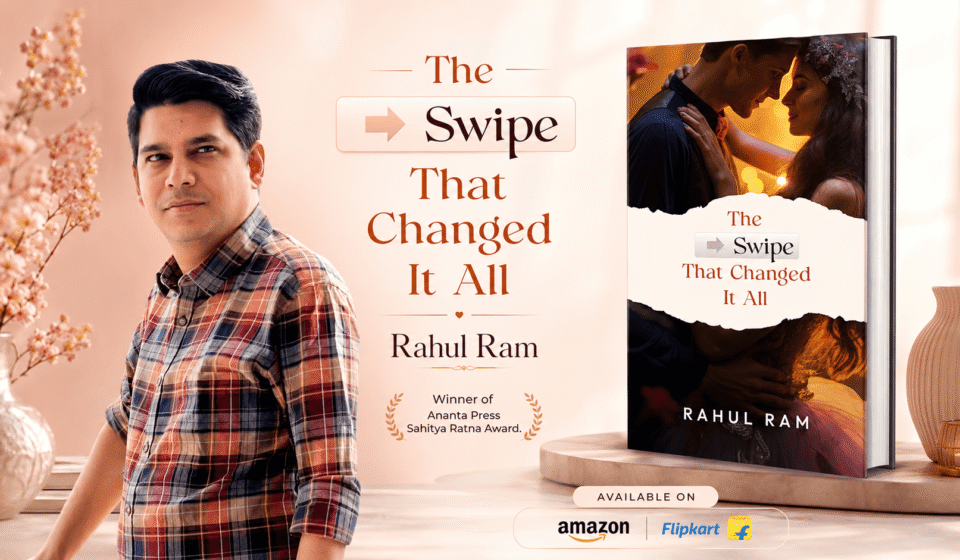

The Swipe That Changed It All by Rahul Ram
The most fascinating idea in The Swipe That Changed It All is not simply that its protagonist invents a machine. It is that he invents a machine because he is grieving. Rahul Ram builds his novel around a conflict that belongs equally to science, philosophy, and the human heart. Vivaan is an inventive genius who wants to remove the sensation of pain, but his ambition is born from loss rather than curiosity alone. The invention is therefore deeply personal. It is a technological answer to an emotional question, and the novel’s power comes from examining why that answer may be incomplete.
Pain is usually treated as an enemy. People seek medicine for physical pain, therapy for emotional pain, and distraction from memories that continue to hurt. In ordinary life, the desire for relief is natural and often necessary. The Swipe That Changed It All does not dismiss that desire. Vivaan’s suffering is real, and his wish to escape it is understandable. What the book questions is the belief that all pain can be removed without changing the meaning of a person’s life.
Vivaan’s machine represents the dream of perfect control. If pain can be isolated, measured, and switched off, then perhaps grief can be managed like a technical malfunction. Yet human experience does not operate so neatly. Pain is connected to memory, memory is connected to identity, and identity is connected to relationships. The loss of a loved one hurts because the relationship mattered. The memory is painful because it carries love, belonging, and a sense of what once existed. To remove only the suffering while preserving every other part of the experience may be impossible.
This is the ethical tension that makes the book unique. The invention appears compassionate on the surface. A world without pain sounds desirable. However, the novel invites readers to consider the consequences of emotional numbness. Pain warns people when something is wrong. It teaches limits. It encourages empathy because those who have suffered can recognise suffering in others. It can also become destructive, overwhelming, and paralysing, but even then, the answer may not be complete erasure. The book’s central idea asks whether healing should reduce pain or help a person understand and carry it differently.
Aanya’s role is crucial because she reveals the personal cost of Vivaan’s project. While building a machine to escape the memories of loss, he loses the relationship that makes his life worthwhile. This irony gives the novel its emotional force. Vivaan is so focused on preventing suffering that he creates another form of suffering. He tries to protect himself from the past but damages the present. His intelligence allows him to build something extraordinary, yet intelligence alone cannot teach him how to remain emotionally available to the person who loves him.
The relationship between Vivaan and Aanya also demonstrates why love cannot exist without risk. To love someone is to accept the possibility of disappointment, separation, change, or loss. No machine can guarantee permanent emotional safety. If a person refuses every possibility of pain, that person may also refuse intimacy. The novel does not romanticise suffering for its own sake. Instead, it recognises vulnerability as a necessary condition of meaningful connection.
This makes the story especially relevant in a culture that often promotes quick solutions. Digital platforms promise instant communication, instant entertainment, instant validation, and instant escape. A swipe can replace one image with another, one conversation with another, and sometimes one person with another. The title The Swipe That Changed It All captures this environment perfectly. A swipe looks effortless, but the decisions connected to it may shape relationships and futures. The novel uses that familiar digital gesture to point toward a larger truth: technology can simplify actions, but it cannot automatically simplify consequences.
Rahul Ram is well positioned to explore this conflict. His education in software engineering and his long professional experience in digital marketing have placed him close to the systems that influence modern behaviour. Digital marketing studies attention, choice, desire, habit, and response. Fiction studies many of the same things through character and story. In this novel, these two fields meet. The technological premise feels connected to the author’s professional world, while the emotional themes reflect his interest in love, loss, resilience, and human connection.
The novel can also be read as a warning against confusing suppression with recovery. Vivaan wants to stop feeling pain, but recovery usually requires engagement rather than disappearance. Grief must be acknowledged. Regret must be understood. Relationships must be repaired through communication and responsibility. By turning the wish for emotional suppression into a physical machine, the book makes an invisible psychological process visible. Readers can see the danger because it has taken a concrete form.
At the same time, the story remains hopeful. Its themes of healing and second chances suggest that damage does not have to be final. A second chance is not a return to innocence. It is an opportunity to act with greater awareness. Vivaan’s journey therefore has the potential to resonate with anyone who has allowed fear, work, grief, or obsession to create distance in a relationship. The specific machine may belong to fiction, but the emotional pattern is common. People often become so focused on protecting themselves that they fail to notice whom they are pushing away.
The book’s originality also lies in its refusal to divide technology into simple categories of good and bad. Technology itself is not the villain. Vivaan’s invention grows from a sincere desire to reduce suffering. The problem lies in the assumption that technical ability is the same as emotional wisdom. A person may be capable of creating a powerful tool without being ready to understand its effect. This distinction matters greatly in the modern world, where innovation often moves faster than ethical reflection.
The story therefore encourages readers to ask important questions. Who decides what kind of pain should be removed? Would people choose numbness if it meant weakening love, memory, or empathy? Could such a machine be used responsibly, or would it become a method of avoidance? Would removing pain make people kinder, or would it make them less able to understand one another? These questions expand the novel beyond Vivaan’s individual struggle and give it a wider social relevance.
The emotional appeal, however, remains central. The book is not presented as a technical argument. It is the story of a man who is wounded, a woman whose love is endangered by his choices, and a relationship that must confront the difference between escape and healing. The speculative idea increases the tension, but the reader’s investment comes from the possibility of loss and reconciliation.
As a debut, The Swipe That Changed It All shows Rahul Ram’s interest in combining accessible storytelling with thought-provoking themes. His background helps him imagine the technological side, while his love of books and cinema supports a narrative shaped by emotional stakes. The result is a work that can appeal to readers of contemporary romance, general fiction, and speculative drama without becoming limited to a single category.
What makes the novel worth reading is its central message. Pain is not valuable because suffering should be celebrated. Pain is significant because it is connected to what people care about. The proper goal is not necessarily to preserve pain, but to prevent the search for relief from destroying love, identity, and empathy. Vivaan’s tragedy begins when he treats the heart like a faulty system. His hope lies in learning that emotional life cannot be perfected through control.
The Swipe That Changed It All is therefore a meaningful exploration of the limits of invention. It asks whether human beings should build everything they are capable of building, especially when the invention touches memory and emotion. It also asks whether love can survive when one person tries to become unreachable. Through Vivaan and Aanya, Rahul Ram offers a story about grief, responsibility, and the difficult courage required to feel again. The machine may promise freedom from pain, but the novel suggests that true freedom comes from accepting emotion without allowing it to define every future choice.
Buy the Book on Amazon: https://www.amazon.in/Swipe-That-Changed-All/dp/B0DWXFBFZJ/