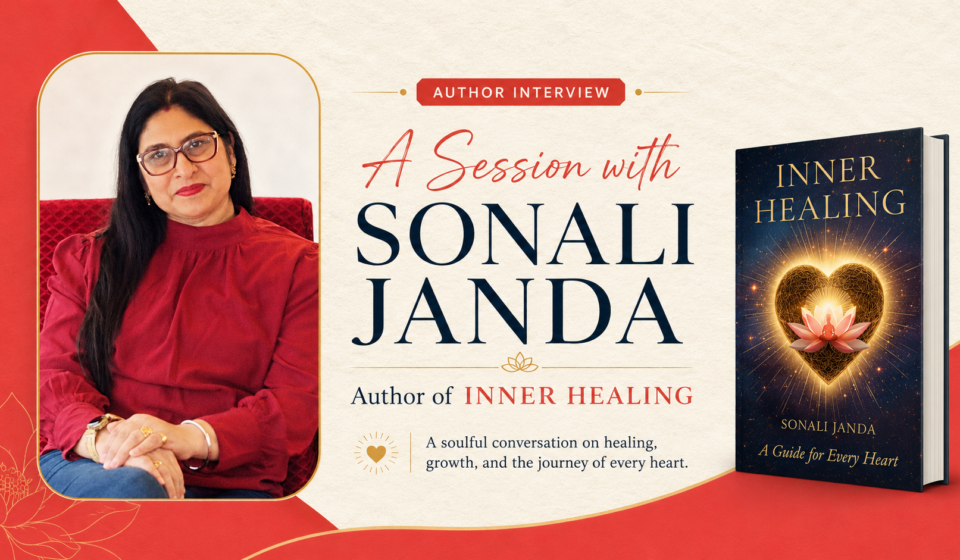

Shreya Raina – Inner Healing begins with an emotional dedication to your late brother, Subedar S. Baldev Singh. How did his life, strength and loss influence the writing of this book?
Sonali Janda- My late brother, Subedar S.Baldev Singh, was a symbol of courage, discipline, and selfless service. Losing him was one of the most emotional moments of my life, and it inspired me to understand pain, acceptance, and healing more deeply. This book is my tribute to his strength and values. His life taught me that true courage is not avoiding pain but learning to heal and move forward with hope.
Shreya Raina – Was there a particular moment in your personal journey when you realised that emotional healing needed to become the central purpose of your work?
Sonali Janda- Yes. After going through my own emotional struggles, I realized that many people silently carry pain, stress, and emotional wounds without knowing how to heal. My personal healing journey transformed my life and gave me a new purpose. That was the moment I decided to dedicate my work to helping others heal emotionally and live happier and more peaceful life.
Shreya Raina – Your book combines personal experience, spirituality, Reiki, meditation, Rajyog and NLP. How did you bring these different influences together while developing its message?
Sonali Janda- My book is a reflection of my own healing journey. Every practice I have included—spirituality, Reiki, meditation, Rajyog, and NLP—has helped me in different ways. Instead of focusing on one method, I combined the wisdom and practical tools that truly worked for me. My goal was to create a simple, holistic guide that helps readers heal their mind, emotions, and inner self
Shreya Raina – Why do you believe so many people suppress their emotions instead of trying to understand and express them?
Sonali Janda- I believe many people suppress their emotions because they fear being judged, rejected, or misunderstood. From childhood, we are often taught to hide our feelings instead of expressing them. Over time, these unhealed emotions become stress and emotional pain. My book encourages people to understand, accept, and express their emotions in a healthy way, because healing begins with awareness.
Shreya Raina – The book gives significant attention to healing the inner child. What first helped you understand the connection between childhood experiences and adult emotional patterns?
Sonali Janda- During my own healing journey, I realized that many of our fears, insecurities, and emotional reactions have roots in childhood experiences. Through self-reflection, meditation, and healing practices, I understood that healing the inner child can transform our present life. That realization became an important message in my book.
Shreya Raina – You clearly distinguish forgiveness from reconciliation. Why was it important for you to explain that a person can forgive someone while still maintaining boundaries or distance?
Sonali Janda- Many people think forgiveness means accepting hurtful behavior again, but that’s not true. Forgiveness is about freeing yourself from emotional pain, while boundaries protect your peace and self-respect. I wanted readers to understand that they can forgive from the heart without allowing the same harm to happen again.
Shreya Raina – Several chapters contain journaling exercises, guided visualisations, affirmations and self-reflection practices. How did you select the exercises included in the book?
Sonali Janda- I selected the exercises based on my personal healing journey and my experience working with clients. I included only those practices that are simple, practical, and effective in creating self-awareness and emotional healing. My intention was to give readers tools they can easily apply in their daily lives.
Shreya Raina – What does self-love mean to you personally, and how is it different from the popular or commercial understanding of self-care?
Sonali Janda- For me, self-love means accepting yourself completely—with your strengths, weaknesses, and imperfections. It is about respecting your emotions, setting healthy boundaries, and choosing your inner peace. Self-care is something we do, but self-love is how we value ourselves. True healing begins when we genuinely love and accept who we are.
Shreya Raina – Your book discusses the balance between feminine and masculine energy beyond gender. How can readers identify which energy may be out of balance in their own lives?
Sonali Janda- Everyone has both feminine and masculine energies, regardless of gender. When we become too controlling, impatient, or emotionally disconnected, the masculine energy may be dominant. When we feel overly emotional, fearful, or unable to take action, the feminine energy may need strengthening. Self-awareness is the key to recognizing these patterns and restoring balance for a healthier, happier life.
Shreya Raina – After readers complete Inner Healing — A Guide for Every Heart, what is the most important change you hope they will begin making in their relationship with themselves?
Sonali Janda- My greatest hope is that readers begin to accept, love, and trust themselves. I want them to stop blaming themselves for their past, embrace their emotions with compassion, and believe that healing is possible. When our relationship with ourselves improves, every other relationship in life also begins to transform.