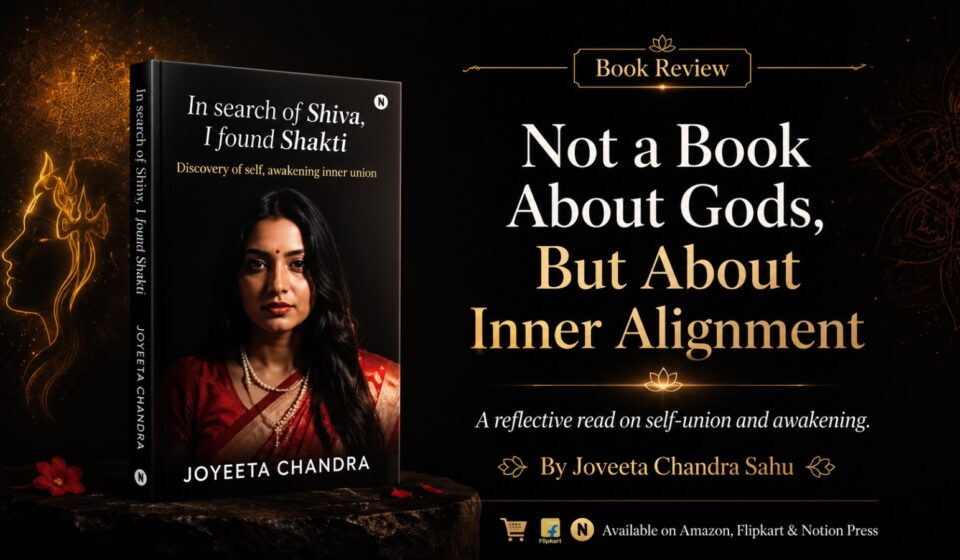

In a world full of quick spiritual hacks, this book feels like a slower and more sincere reminder: awakening is not a trend, it is a practice of returning to yourself.
In Search of Shiva, I Found Shakti can be read as a spiritual memoir, but it can also be read as a modern sadhika’s handbook. The word sadhika matters because the book is not written from the perspective of a detached observer. It is written by someone walking the path, making sense of signs, practices, doubts, surrender, grief, energy, ego, and inner union. The author does not write like someone offering a ready-made formula. She writes like someone who has been changed by the journey and now wants to share what that journey revealed.
This makes the book important in the current spiritual climate. Many people today are attracted to spiritual practices but do not know how to hold them responsibly. They may collect affirmations, follow astrology updates, save meditation reels, buy crystals, repeat mantras, read about chakras, and still feel fragmented. This book suggests that practices become meaningful only when they are connected to awareness. A ritual without awareness may become habit. A mantra without humility may become ego. A spiritual identity without inner work may become performance. The book repeatedly points readers back to integration.
The available review material notes that the book includes reflective practices and speaks about themes such as conversations between the heart and mind, Krishna, Shiv Shakti Nritya, meditation, rituals, prayers, tapping exercises, and mindful recipes. These details show that the book is not only theoretical. It wants to give readers ways to experience reflection through body, emotion, food, prayer, and movement. This broad approach is one of the book’s attractive features. It recognizes that awakening does not happen only through thought. It can also happen through breath, touch, rhythm, memory, eating, and daily intention.
The book’s subtitle and promotional line about manifesting the highest self through conscious inner awakening fit this practical dimension well. The phrase “highest self” is often used loosely in self-help culture. Here, the idea gains more weight because the book connects it to Shiva-Shakti union. The highest self is not just the most successful version of the self. It is the most integrated version. It is the self that can hold stillness and action, devotion and questioning, softness and strength, grief and gratitude. This gives the message emotional depth.
One of the book’s key lessons is that spiritual growth requires the dismantling of ego. This is not easy. Spiritual ego can be more subtle than ordinary ego. A person may become proud of being spiritual, proud of knowing certain words, proud of being more awakened than others, or proud of suffering in a special way. The author warns against this by returning to surrender and humility. This is important because the spiritual marketplace today can sometimes encourage identity more than transformation. This book tries to bring transformation back to the center.
Another strong lesson is grounding. The term grounding is everywhere now, but it is often simplified to feeling calm. The book appears to connect grounding with root, truth, stability, and embodied awareness. This is useful for readers because many people try to rise spiritually without first becoming stable emotionally. They want higher chakras but avoid the root. They want visions but avoid responsibility. They want divine love but avoid human boundaries. A grounded path, as suggested by the book, requires the reader to stabilize before expanding.
The book also has value because it respects feminine power without turning it into a slogan. Shakti is not reduced to glamour, confidence, or surface-level empowerment. Shakti is energy, creation, emotion, destruction, healing, and movement. At times, this energy needs the witness of Shiva. At times, it needs to break illusions. At times, it needs to return to stillness. This is a mature view of power. It tells readers that feminine energy is not only softness and beauty. It is also fierce clarity, inner fire, and the courage to release what is false.
The author’s interest in Mahakali and the symbolic grounding of unanchored Shakti adds a powerful dimension. Many readers are drawn to Kali or Mahakali because of the image of destruction, but the deeper meaning is often misunderstood. In this book’s spiritual logic, destruction is not pointless violence. It is the breaking of illusion. It is the removal of false protection. It is the clearing of what prevents truth from stabilizing. This makes the book important for readers who are going through life transitions. Sometimes what is falling apart is not punishment. It may be the collapse of what was built on fear.
Another important part of the book is its emotional honesty. It does not present the sadhika path as aesthetic perfection. It includes doubt, loss, judgments, confusion, and questions. This makes it relatable. Many readers feel unworthy of spiritual growth because they still feel anger, grief, fear, jealousy, or uncertainty. The book’s tone suggests that these emotions do not disqualify a person from the path. They become material for the path when approached consciously. This is a compassionate message.
The practical value of the book also lies in its invitation to slow down. In a fast digital culture, people want instant results from everything, including healing. But sadhana is not instant. It is repeated attention. It is the daily return. The book’s movement from big questions to personal memory to practices gives readers a sense that inner awakening is layered. One does not simply read a line and become transformed. One lives, observes, returns, and practices. This slow rhythm is necessary.
The book may be especially useful for readers who enjoy journaling, meditation, energy work, devotional reflection, and personal growth. It can also appeal to readers interested in the divine feminine and divine masculine but looking for a deeper explanation than social-media captions offer. The book gives language to the popular idea of balance but places it in a more reflective and spiritual frame. This makes it shareable for modern audiences while still carrying depth.
At the same time, the book is not a perfect fit for everyone. Readers who want a strictly organized, step-by-step manual may feel that the memoir-like flow requires patience. Readers who want purely academic theology may want more formal citations and historical framing. But those are not necessarily weaknesses; they are signs of the book’s chosen form. This is an experiential book. It is written from the inside of a journey. Its strength is not rigid structure. Its strength is sincerity, intensity, and personal connection.
Why is this book important as a modern sadhika’s handbook? It is important because it refuses to separate the sacred from the self. It shows that rituals matter, but so does the consciousness behind them. It shows that divine stories matter, but so does the way they help us understand emotion, ego, family, and action. It shows that awakening is not about appearing spiritual to others. It is about becoming honest before oneself.
The book is also important because it gives readers permission to approach spirituality in their own language. The author acknowledges that some may read with faith, some with surrender, some with curiosity, and some with skepticism. This inclusive posture makes the book welcoming. It does not shut out the reader who is unsure. Instead, it says that uncertainty can also walk on the path. This is valuable because many people stand at the doorway of spirituality, interested but hesitant. A book like this can help them enter gently.
From a promotional point of view, the book has strong review potential because it offers many social-media-friendly hooks without being shallow. Lines such as “the union of self,” “conscious inner awakening,” “finding Shakti after searching for Shiva,” “death as liberation,” and “the sacred within daily life” can all become powerful poster concepts. But the real content behind those hooks is serious enough to sustain long-form reviews. This combination makes the book useful for both readers and book marketers.
The final takeaway is that In Search of Shiva, I Found Shakti is a meaningful read for anyone seeking a spiritual book that feels personal, feminine, reflective, and practical. It does not promise that awakening will be easy. It does not pretend that the path is only peaceful. It shows that the path includes questions, pain, devotion, discipline, ego-breaking, grounding, and the gradual discovery of inner union. In a time when spirituality is often turned into a trend, this book reminds us that the real work is quieter, deeper, and more honest. It asks the reader not merely to look for Shiva or Shakti outside, but to recognize where both have been waiting within.
As a final promotional note, this review angle can attract readers who want something more than a motivational quote. It positions the book as reflective, practical, and emotionally aware. That combination makes it suitable for spiritual readers, healing communities, book clubs, and social-media audiences interested in conscious living.