
In Conversation with the author of Under the Mango Tree
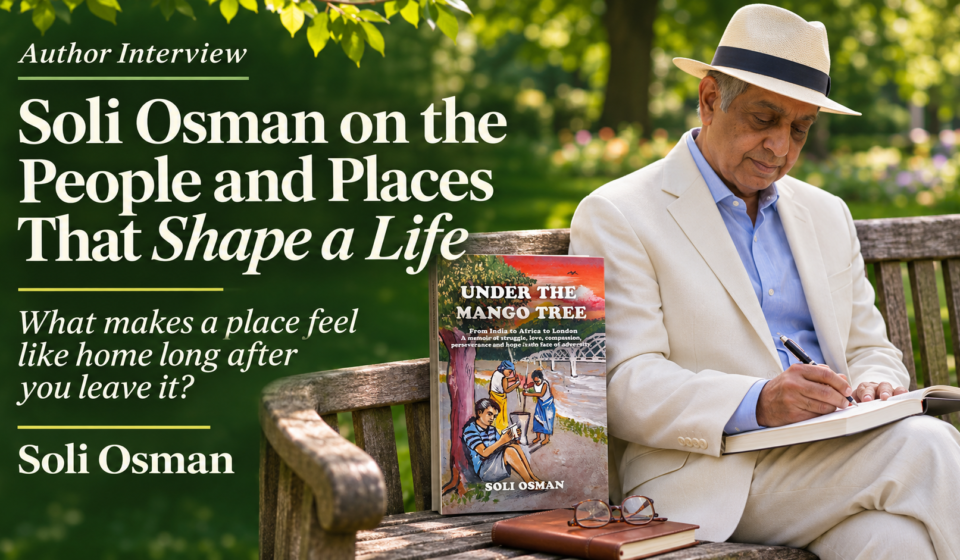
What stays with a person when familiar places disappear into the distance? Under the Mango Tree follows Zebee and Salman through family upheaval, migration, and the struggle for a secure future. Moving between India, Africa, and Britain, the memoir brings questions of belonging close to everyday life. This conversation explores its central relationships, its attention to dignity, and the small acts of care that give its journey meaning.
1. What would you like a reader to notice first about this story?
I would like the reader to notice the people before drawing conclusions about their circumstances. It is easy to describe someone as a migrant, a single mother, or a homeless young man. Those descriptions tell us very little about the person living that life. Zebee and Salman have hopes, pride, affection, and fears that cannot fit into a label. If readers begin by understanding their relationships and daily concerns, the wider questions about society become more meaningful. The human connection gives those questions their weight.
2. What does the mango tree mean within the book?
I see it as an image that can hold several kinds of memory. In the opening, people gather beneath it while a new life begins. Later, it offers Salman a place to sit with feelings that he cannot easily share. It is connected to company, shelter, and private thought. When he is far from that environment, the absence of such a familiar refuge becomes important too. The title invites the reader to think about the places that once made them feel safe, and why those places remain present in memory.
3. Why is Zebee so important to understanding Salman’s journey?
His story makes more sense when we understand the life that came before his own choices. Zebee has already faced restrictions, loss, and rejection. She tries to give Salman the education and possibility that were limited in her life. Her influence is practical as well as emotional. It appears in food, work, preparation, and concern for his character. I would like readers to recognise how much a child’s future can depend on labour that is rarely celebrated. Zebee’s care remains important even when Salman is physically far away.
4. The memoir contains painful family relationships. How can readers approach them fairly?
I think it helps to look carefully at what people do and what their actions cost others. Family relationships can carry affection, obligation, status, and control at the same time. Recognising that complexity does not require us to excuse hurtful behaviour. It allows us to understand why a decision can leave such a deep mark. Salman often wants something very simple, such as reassurance or an affectionate gesture. When that need is not met, the disappointment shapes how he sees himself and how he approaches later relationships.
5. What do Donna Maria and Antonio Thuka add to the story?
They widen the circle of people who help shape a life. Donna Maria offers Zebee friendship and a perspective that challenges some of her fears and assumptions. Antonio Thuka gives Salman companionship and a way of learning about the natural world around him. Their importance comes from their presence and their actions. Through them, readers can see care crossing the boundaries that society often treats as fixed. A child can receive guidance from someone outside the family, and a woman can find strength in a friendship that others might overlook.
6. How would you describe the relationship between the family story and political history?
The two are closely connected because political events affect what a family can safely do. A journey, a school decision, or a plan to remain in a country may change because of events far beyond the household. People then have to respond with the information and resources available to them. I would encourage readers to notice those points of contact. History becomes easier to understand when we see how it changes an ordinary conversation, creates a new fear, or forces someone to leave a place they love.
7. What is important about the way education appears in the memoir?
Education represents possibility, but the story also asks what a person needs in order to pursue it. Motivation matters, yet a student still needs food, rest, books, and somewhere to live. Salman repeatedly tries to hold those needs together while continuing his studies. I hope readers notice that effort, including the times when the results disappoint him. A difficult educational path should not be judged only by an examination result. The conditions surrounding that result may tell us much more about the person and the obstacles they face.
8. What might readers take from Salman’s periods of homelessness?
I would hope for a more patient understanding of people whose lives have become insecure. Homelessness affects sleep, health, confidence, and the ability to plan. It can also make someone ashamed to approach people they know. That shame can deepen the isolation. Salman still has interests, abilities, and ambitions during those years, even when he struggles to meet immediate needs. Readers might consider how much difference a practical opportunity can make, and how easily potential can remain unseen when someone is judged only by their present appearance.
9. How does Vicky change the emotional direction of the book?
Her relationship with Salman creates space for companionship and a shared future. Their conversations and ordinary time together matter because he has spent so much energy managing uncertainty. Love does not remove every practical difficulty, but it can help a person feel that those difficulties no longer have to be faced in complete isolation. Their relationship also asks both of them to think about cultural expectations and family concerns. What becomes important is their willingness to listen, make decisions together, and take each other’s hopes seriously.
10. What would you like readers to carry away after the final page?
I would like them to remember that a life can change direction without its earlier struggles becoming meaningless. The people who help us, the mistakes that trouble us, and the places we leave can all shape what we do next. Salman’s growing interest in helping others gives that idea a practical form. Perhaps readers will also think about someone whose quiet support made a difference in their own lives. Remembering that person can make us more attentive to the help another person may need from us today.
Find the book on Amazonhttps://www.amazon.in/UNDER-MANGO-TREE-Soli-Osman/dp/9378211313